
Deck Lighting Installation in Rochester, NH
Premier Deck provides low-voltage deck lighting installation for new and existing decks in Rochester, NH. We plan fixture zones, cable routes, controls, and access around the deck structure, while regulated electrical work is assigned separately when required.
5-Year Workmanship Warranty
Low-Voltage Deck Lighting
Stair + Rail Visibility Planning
Electrical Coordination
The Problems a Useful Lighting Plan Solves
Deck lighting installation should improve movement and use after dark without turning the deck into one bright, glaring area.

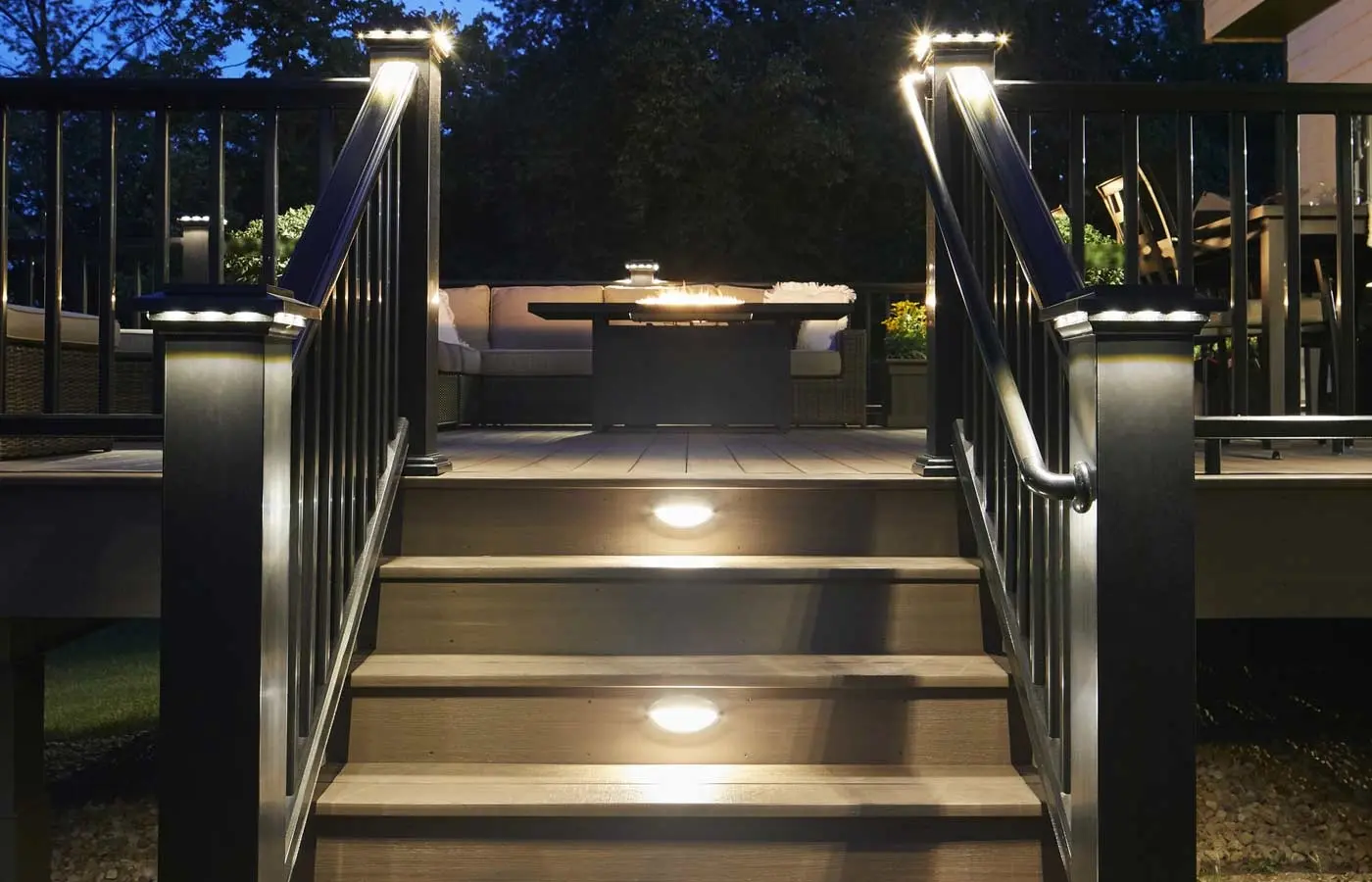
Dark Stairs and Changes in Level
Treads, landings, door thresholds, and changes in elevation are easy to miss after sunset. One bright fixture can cast hard shadows without showing the entire travel path. We place the first layer of light where a person needs to see an edge or transition.Glare at Eye Level
A fixture can be bright and still make visibility worse when it shines toward seating, windows, or a person climbing stairs. Good placement controls the direction and intensity of light. The goal is enough illumination to use the deck, not the highest possible fixture count.Cable Added After Finishes Close
Decking, fascia, trim, railing sleeves, and stair finishes can block clean cable routes. Adding lights late can leave exposed wire, inaccessible connections, or unnecessary surface damage. Early planning keeps routes and service points practical.
What Low-Voltage Deck Lighting Includes
Deck lighting installation begins with how people enter, cross, and use the deck after dark.
We may plan and install low-voltage post-cap lights, rail lights, step or riser lights, accent fixtures, compatible cable, a transformer, controls, protected connections, and accessible service points. The work includes fixture placement, low-voltage routing, attachment to the deck or railing, connection of compatible components, testing, and adjustment.
Lighting can be coordinated with a new deck or added to an existing one when access permits. A new build offers more concealed-routing choices because framing and finishes remain open. Retrofit work may need a simpler layout that respects the deck already in place.
What Is Not Included
A low-voltage lighting proposal does not automatically include household circuits, panel work, line-voltage outlets, unrelated yard lighting, or electrical upgrades. When the design needs regulated electrical work, an appropriately qualified provider must complete that portion.
Lighting also does not include deck reconstruction, railing replacement, yard work, or repair of unsafe stairs and framing unless the proposal states otherwise. Illumination does not correct a loose stair, unstable guard, damaged frame, or poor walking surface.
How We Install Deck Lighting and Plan the System
Our deck lighting installation method starts with use areas rather than a fixture catalog.
We identify doors, stairs, landings, level changes, rail lines, seating, dining, grilling, and the main route to and from the yard. We then place practical light at safety-critical transitions and add softer light where it improves evening use without shining into faces or nearby windows.
Next, we map the transformer, low-voltage cable, branch points, controls, connections, and service access. On a new deck, cable paths are coordinated before decking, fascia, stairs, and railing close the framing. On an existing deck, we use accessible routes and avoid needless disturbance to finished surfaces.
We install compatible outdoor components, protect and support the cable, keep serviceable parts reachable, and test each zone. The final check covers visibility, glare, balance, controls, and fixture operation.
Fixture Zones and How to Choose
A clear deck lighting installation plan uses different fixtures for different jobs.
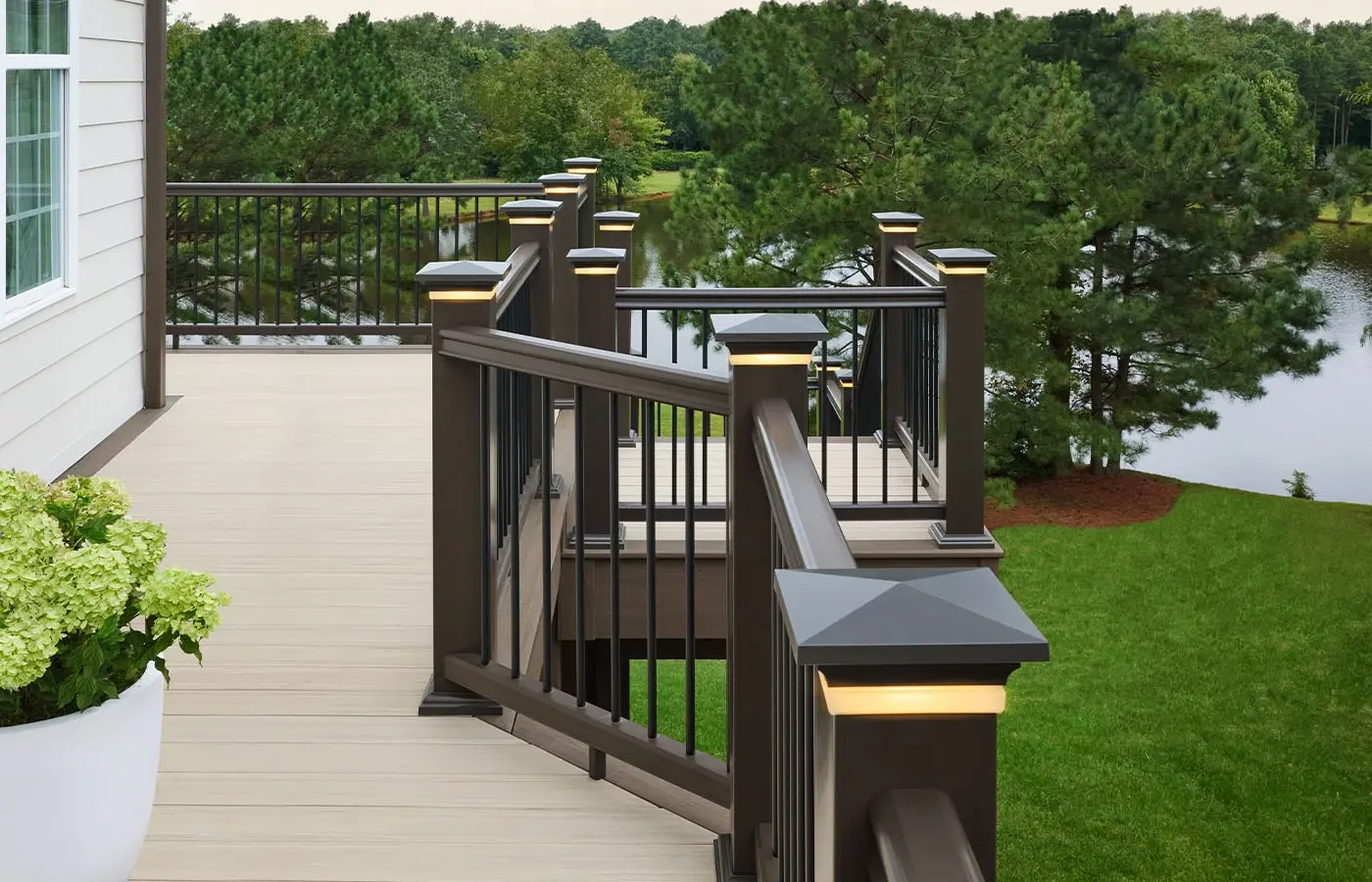
Small fixtures can define treads, risers, and landings without relying on one harsh overhead source. Placement should reveal the edge while keeping direct glare out of a person’s eyes.
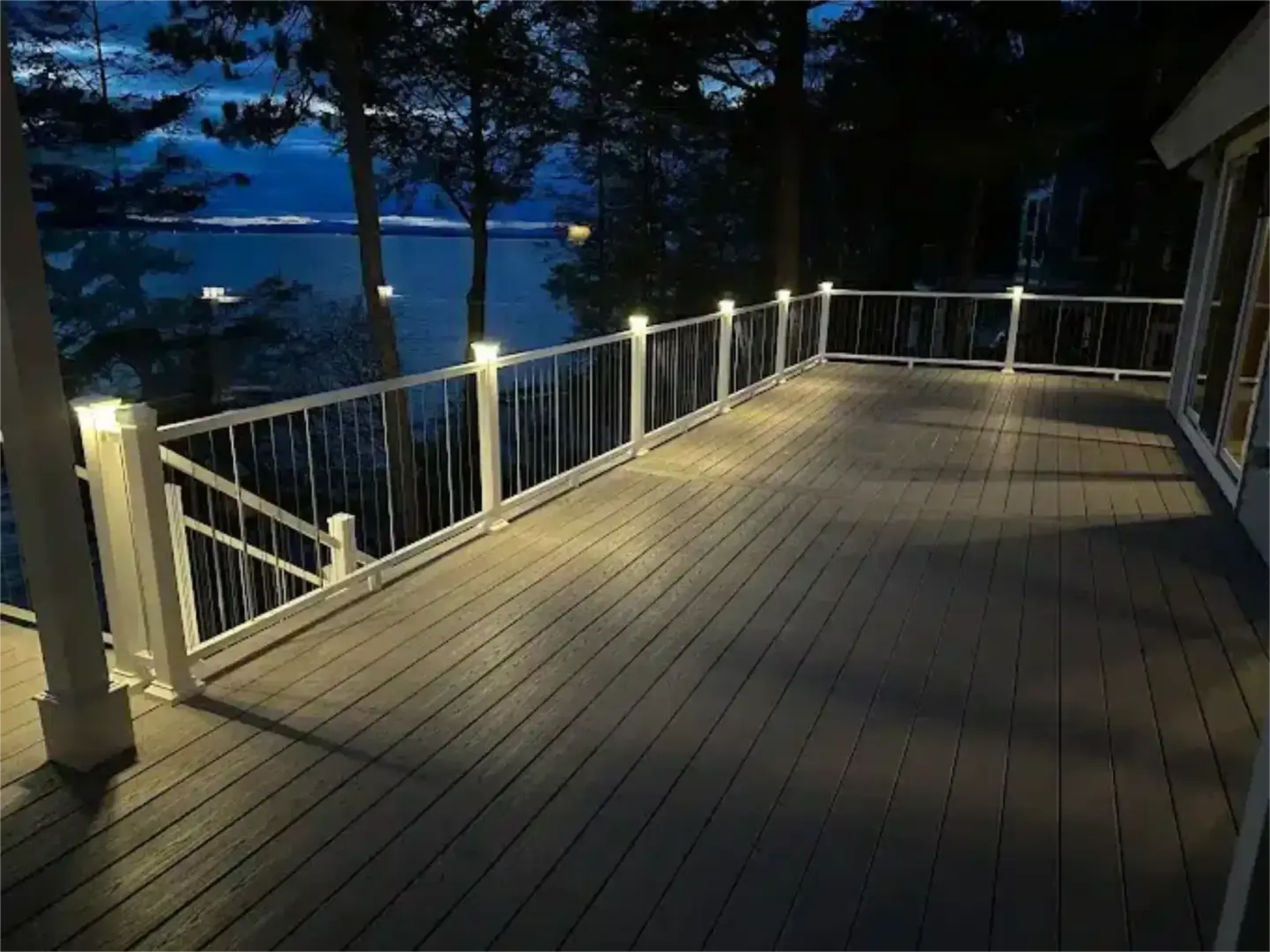
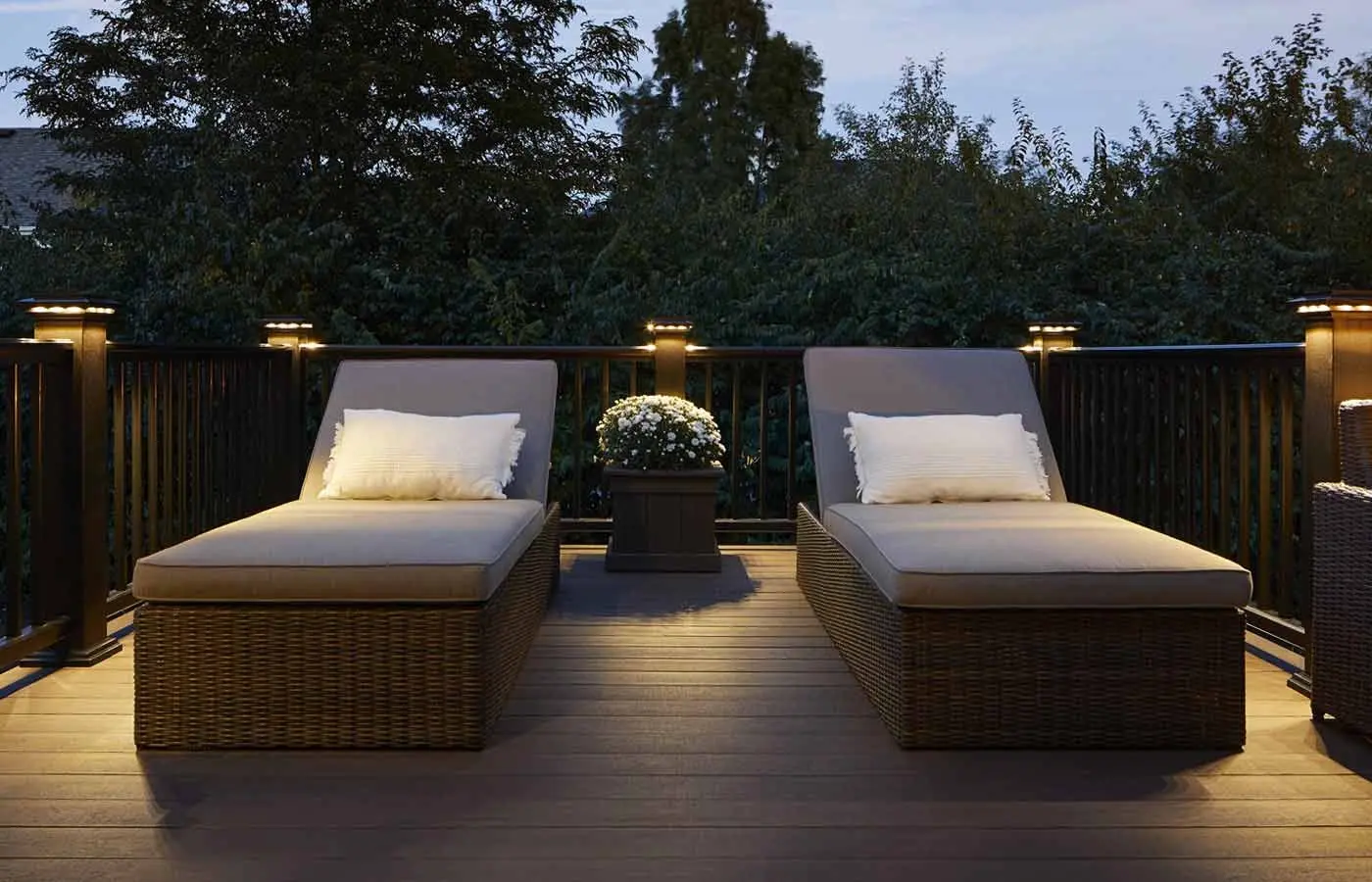
Post and rail fixtures define the deck perimeter and can coordinate with the railing. Spacing should respond to useful light levels, not an automatic rule that places a fixture on every post.
Accent fixtures can mark an edge, feature, or travel route. They work best as a supporting layer after entries, stairs, and level changes are clear.
Controls can separate practical light from softer evening light and reduce the need for manual operation. The transformer, fixtures, cable, and controls must be compatible as one low-voltage system.
TimberTech and Trex appear in the company material record. Current lighting products, control compatibility, availability, and written manufacturer terms are confirmed for the deck and railing selected.
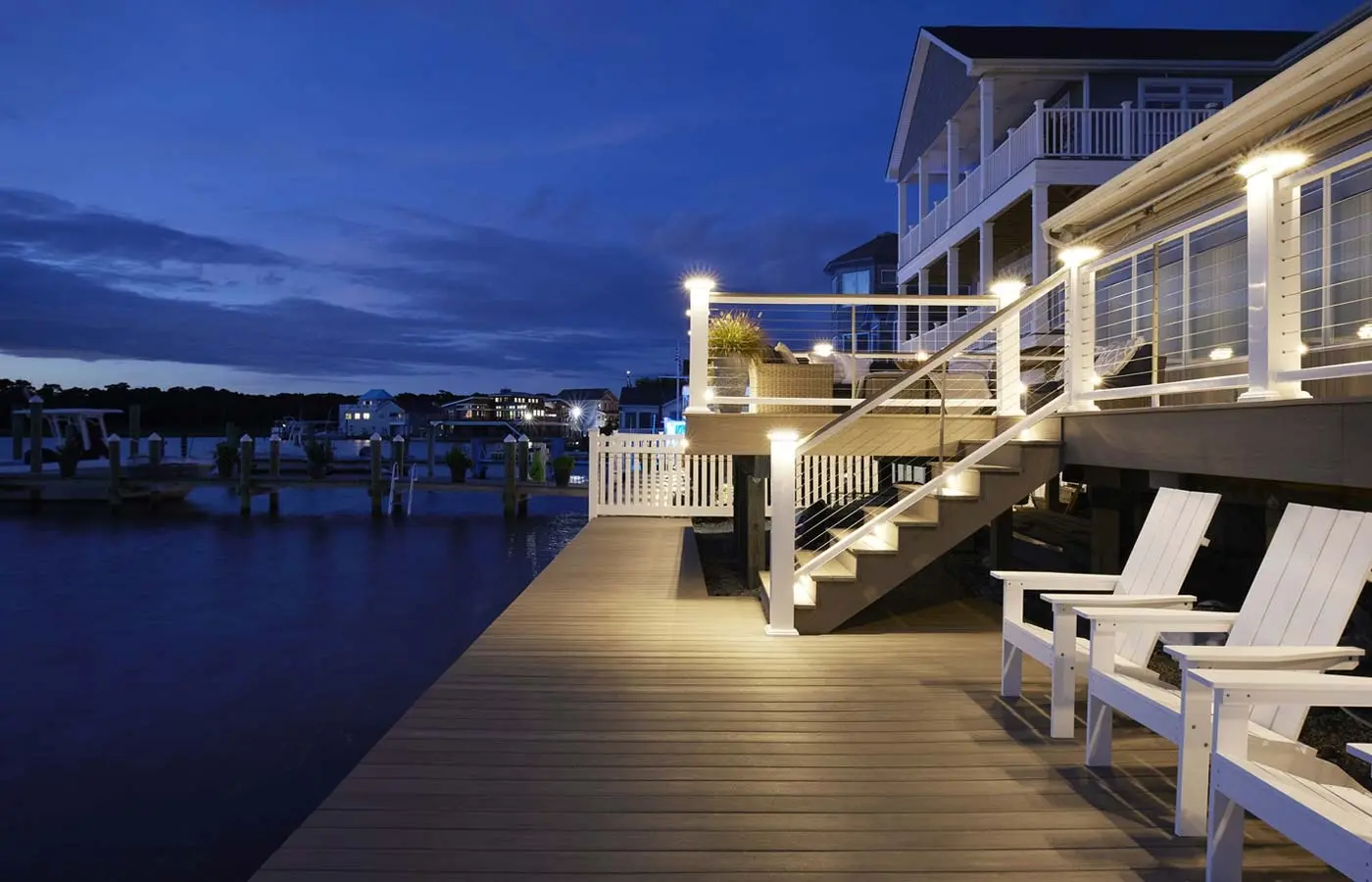
Step Lights Compared With Post-Cap Lights
Step lights and post-cap lights solve different visibility problems, so one is not a universal substitute for the other.
Step fixtures put light near treads, risers, and landings. Post-cap fixtures define the perimeter and add a broader visual rhythm around the deck. Step lights usually deserve priority where stairs are the main concern, while post-cap lights can support orientation and atmosphere. Many useful plans combine the two at restrained levels rather than multiplying one fixture type everywhere.
What Changes the Cost of Deck Lighting
Lighting cost changes with the fixture plan and the access available for cable.
Fixture type and count, lighting zones, controls, transformer needs, cable length, railing integration, stair complexity, deck height, and retrofit access all matter. Work on an open new frame usually offers cleaner routes than work behind finished decking, fascia, and sleeves. Any separately required regulated electrical work also affects the complete project cost.
More fixtures do not automatically make a better system. A smaller plan focused on entries, stairs, and travel paths can be more useful and easier to maintain. We prepare the proposal for the actual deck instead of posting a price range that may not fit.

Design, Product, and Installation Timing
Lighting timing depends on whether the work belongs to a new build or a finished deck.
A new deck should have fixture locations, controls, transformer placement, and cable paths settled before surfaces close. A retrofit requires an access review before the fixture count and placement can be finalized. Product availability, railing compatibility, weather, and coordination with any qualified electrical provider can also affect timing. Current expectations belong in the project documents.

Why Deck Lighting Needs Deliberate Design
The hidden parts of lighting determine whether the visible fixtures remain practical to use and service.
Poor placement can leave stair edges dark while producing glare elsewhere. Unplanned cable can be pinched, exposed, trapped behind finish materials, or routed through areas that later need maintenance. Incompatible components can also create control and replacement problems. A deck specialist understands where framing, railing, fascia, and stairs limit access and can plan the low-voltage work around them.
What the Lighting System Needs to Coordinate
We treat low-voltage lighting as part of the deck, not as decoration added at the end.
Sales, design, project management, and production roles connect fixture placement with railing, stairs, trim, and low-voltage routing. Crews keep daily logs and photos during construction. Premier Deck's current TimberTech Platinum PRO relationship is relevant where compatible TimberTech products fit, but it does not replace product-specific instructions or the qualifications required for regulated electrical work.
Our Three-Step Lighting Process
The first three steps separate useful low-voltage design from any electrical work that needs another qualified provider.
Identify Use and Visibility Zones
We review doors, stairs, landings, level changes, railings, seating, and the main travel path. On an existing deck, we also check practical access for cable.
1Select Compatible Fixtures and Controls
We develop the low-voltage layout, compare suitable components, map the transformer and cable, and identify any regulated electrical portion that must be assigned separately.
2Coordinate, Install, and Test
We coordinate the lighting with the deck work, install the agreed low-voltage components, and test visibility, glare, balance, controls, and operation.
3
Product Coverage and Workmanship
Manufacturer product coverage and our workmanship responsibilities are separate.
Fixture, transformer, and control coverage follows the selected manufacturers’ current written terms. Any workmanship commitment from us is governed by the signed project documents. The signed project documents determine applicability, and this copy does not invent product benefits, remedies, exclusions, transferability, or registration handling.
Featured Projects
VIEW OUR FULL PROJECT PORTFOLIO
When Lighting Is Not the Right First Step
Lighting is not the right first step when the deck has loose stairs, unstable railing, damaged framing, unsafe access, or surfaces scheduled for near-term replacement.
A retrofit can also be poor value when there is no practical cable route or no accessible place for required components. Correcting the deck first can avoid damaged finishes, wasted fixtures, and repeated labor. A homeowner who wants line-voltage yard work rather than deck-integrated low voltage needs the appropriate electrical or yard-lighting provider.
Deck Lighting Installation FAQs
Where should deck lights go first?
Start with stairs, landings, doors, level changes, and the main walking route. Accent and perimeter lighting can follow after those areas are clear.
Do you perform every kind of electrical work?
No. Premier Deck plans and installs the defined low-voltage deck system. New circuits, panel work, line-voltage tasks, and other regulated electrical work require an appropriately qualified provider.
Can lights be added to an existing railing?
Sometimes. We check fixture compatibility, cable access, post construction, finish condition, and whether the railing can be changed without avoidable damage.
Are more fixtures always better?
No. Too many bright fixtures can create glare, flatten visual contrast, increase maintenance, and make controls more complicated. Useful placement matters more than count.
How much does deck lighting cost?
Cost depends on fixture type and count, zones, controls, cable length, transformer needs, access, railing integration, and any separately required electrical work. The actual deck and selected components determine the proposal.
How long does lighting installation take?
Timing depends on new-build or retrofit access, product availability, fixture count, controls, railing coordination, and any work assigned to another qualified provider. We confirm timing for the actual plan.
When should I postpone a lighting project?
Postpone it when stairs, railing, framing, or decking need correction first, or when a planned rebuild would remove the new fixtures and cable. Repairing the underlying deck avoids duplicate work.
What Our Customers Say
Choosing a deck contractor is a significant decision, and hearing from other property owners can give you a better sense of what working with our team is like.
74 property owners have rated Premier Deck 4.8 stars on Google.


Related Services for Deck Lighting
These adjacent services can affect fixture placement, cable access, and final lighting performance.
Plan post, rail, and stair fixtures while railing locations and blocking are still being designed.
Learn More
A railing replacement can create access for compatible low-voltage fixtures and revised cable paths.
Learn More
Plan lighting before deck boards, fascia, trim, and stair finishes close the frame.
Learn More
Deck and pergola lighting should be coordinated when both structures share the same outdoor area.
Learn More

Request a Deck Lighting Estimate in Rochester
Tell Premier Deck where the deck is difficult to use after dark and how you use the space, and we will map a practical deck lighting installation plan. Request an estimate with no obligation.
Hours: Monday - Friday: 7:00am - 5:00pm
Request An Estimate