Wood is still the most requested decking material in New Hampshire, and it is also the one most likely to disappoint the homeowner who chose it for the wrong reasons. Pressure-treated lumber costs less per square foot than anything else on the market. Ten years later, in Rochester or Barrington or anywhere else with a real frost cycle, that same deck is graying, checking, and pulling fasteners. That does not make wood the wrong answer. It makes it an answer that deserves an honest accounting before you sign a contract. Here is what wood deck installation actually involves in this state, and where the numbers stop working in wood’s favor.
Frost Depth Decides Everything Underneath
Wood deck installation in New Hampshire starts below grade. Frost depth runs roughly four feet through most of the state, and every structural decision follows from that number. Footings that stop short of the line will heave. The deck twists, the ledger strains, and the whole structure begins separating from the house within a few winters. Concrete piers poured to depth work when the soil cooperates. Where it does not, helical piles drive down to load-bearing soil and deliver verified capacity without the excavation and cure time of poured footings. Premier Deck specifies them as part of the build when the site calls for it, not as an upsell. If a contractor quotes your deck without discussing frost depth or the condition of your existing footings, that is the moment to get another estimate.
Permits, Framing, and the Ledger Connection
Permitting varies by town across Strafford County and the Seacoast, and most wood deck installation projects require inspection of footings and framing before the surface goes down. Premier Deck handles that process rather than handing it back to the homeowner.
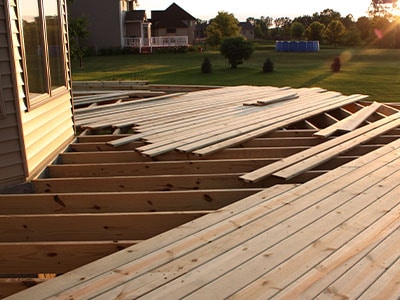
The framing itself carries the entire deck, and the ledger board is where most failures start. Water that gets behind an improperly flashed ledger rots the rim joist of the house, and that repair costs multiples of what the deck did. Correct flashing, joist tape on the framing tops, proper joist spacing for the span, and fasteners rated for treated lumber all determine whether the structure lasts twenty years or fifteen. None of this is visible once the deck is finished, which is exactly why it separates builders.
Choosing the Species
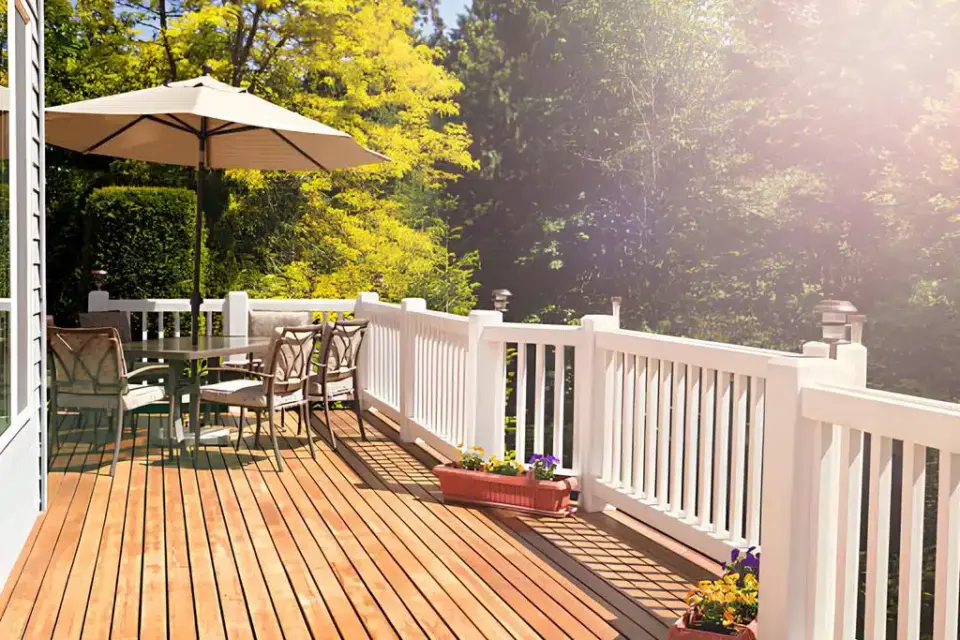
Wood deck installation begins with a real choice about material. Pressure-treated southern yellow pine is the volume option, structurally sound and widely available, though it checks and cups as it dries and grays within two seasons. Cedar resists rot naturally and holds a finer appearance, at a meaningful premium and with softer surface durability. Exotic hardwoods like Ipe are dense, remarkably stable, and expensive, and they demand pre-drilling and hidden fastener systems that add labor to the install. Each species handles Seacoast humidity and winter moisture differently, and the honest comparison is not price per board. It is price per board plus fifteen years of upkeep.
What Maintenance Actually Costs Here
This is where the wood conversation gets specific. Any wood deck installation in New Hampshire needs cleaning, sanding where the grain has raised, and resealing or restaining every two to three years to hold color and resist rot. Snow load sits on the surface for months, freeze-thaw cycles drive moisture into the fiber, and the humid-to-dry swing through summer keeps the boards moving. Figure the cost of stain, the equipment, and either a weekend of labor or a contractor’s invoice, then multiply across fifteen years. Add the boards that crack through and need replacement along the way. That total is the real number to compare against composite, and most homeowners never run it before they decide.
Where TimberTech and Azek Change the Comparison
Premier Deck recommends composite for most New Hampshire projects, and the reasoning is structural rather than promotional. TimberTech by Azek composite and Azek advanced PVC resist moisture absorption, hold their color against UV, and handle the freeze-thaw cycle that breaks down wood fiber, with washing as the only routine maintenance. Premier Deck holds TimberTech Platinum installer status and carries over twenty years of combined experience installing composite in this climate, which matters because product warranties depend on correct installation. A wood deck installation costs less upfront than composite. Across fifteen New Hampshire winters, the maintenance spend on wood typically closes that gap and often crosses it. Wood remains the right call for homeowners with a specific material preference and a real willingness to maintain it. It should be a decision made with the full arithmetic in view.
Finishing the Build
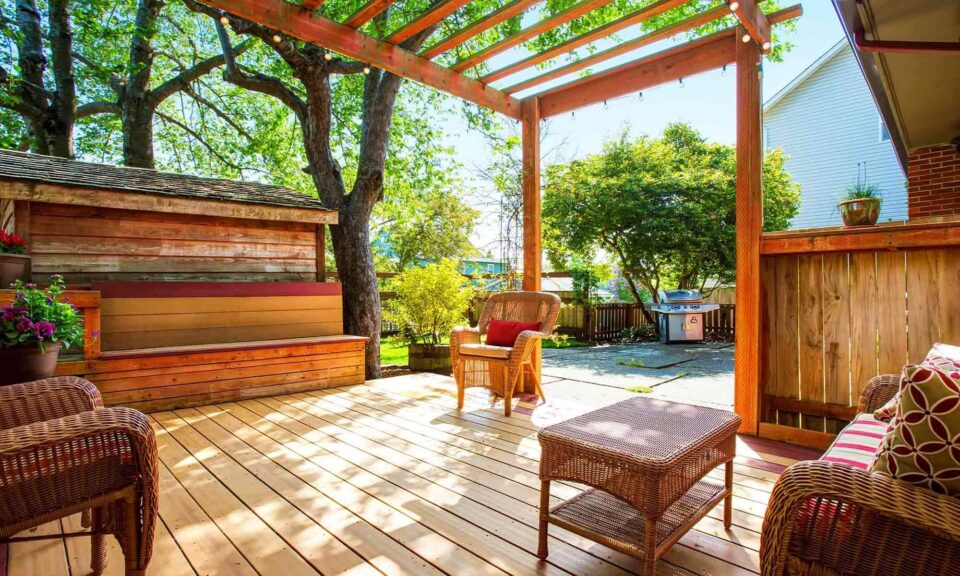
The surface is where the deck starts, not where it ends. Railing choice drives both the look and the code compliance. Re-railing alone often solves a deck whose frame is still sound. Underdeck drainage converts the space below an elevated deck into dry, usable square footage. Deck lighting extends the evening and marks steps and transitions. Lattice closes the perimeter cleanly. Pergolas push usable time into the shoulder seasons on either end of a short New Hampshire summer. These decide whether the finished project is a living space or a platform.
A wood deck installation done correctly holds up for years in this climate. Done without attention to frost depth, flashing, and species selection, it becomes a liability well before the mortgage is paid. Founded in 2018 in Rochester, Premier Deck builds across the Seacoast Region and into Maine, backs the work with a 5-year warranty, and offers financing when scope runs past budget. Every project starts with a free consultation and two to three custom design options, refined through revisions until the design fits the property and the number. Call (603) 833-2353 to get the material comparison for your specific structure before you commit to either direction.