Deck safety should be every homeowner’s top priority when it comes to outdoor living spaces. A well-designed deck serves as an extension of your home, providing a space for relaxation, entertainment, and family gatherings. However, without proper safety considerations, this beloved outdoor retreat can quickly become a liability.
Composite decks are rapidly gaining popularity among homeowners who prioritize both aesthetics and safety. Unlike traditional wood decking, composite materials offer enhanced durability, reduced maintenance requirements, and superior safety features that make them an increasingly attractive option. Premier Deck understands that homeowners want peace of mind when it comes to their outdoor investments, which is why composite decking has become a cornerstone of modern deck construction.
The combination of recycled wood fibers and plastic polymers creates a material that addresses many of the safety concerns associated with traditional decking materials. This innovative approach to deck construction provides homeowners with a safer, more reliable outdoor living space that maintains its integrity and appearance for years to come.
Non-Slip Surfaces: A Key Safety Feature
Slip resistance is one of the most critical safety considerations for any deck, particularly during wet conditions. Composite decking excels in this area through carefully engineered surface textures that provide superior traction compared to traditional materials.
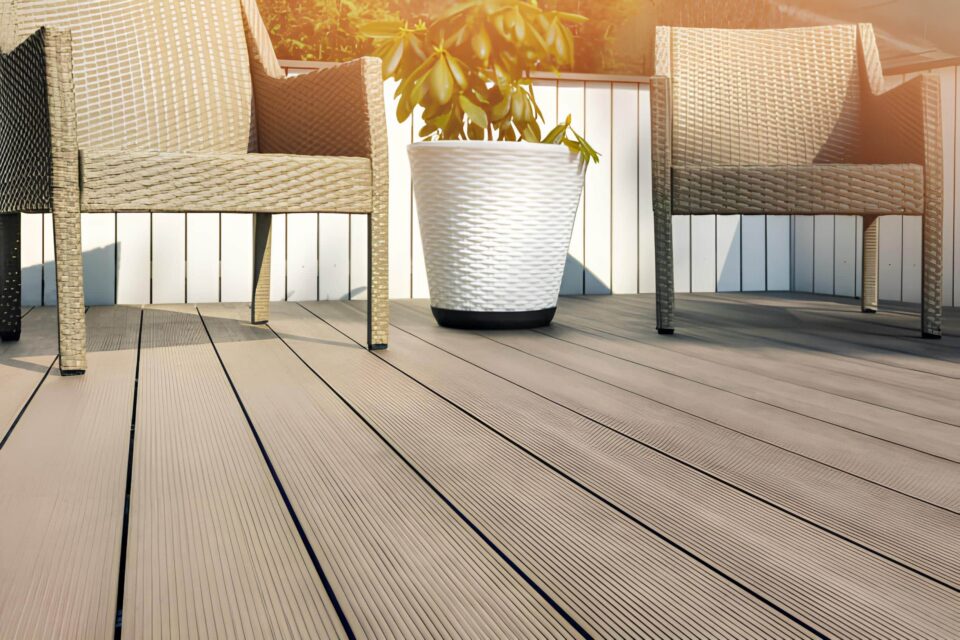
Most composite deck boards feature textured finishes that create microscopic grooves and patterns, significantly improving grip even when the surface is wet from rain, morning dew, or pool water. These surfaces channel water away from foot traffic areas, reducing the likelihood of standing water that can create hazardous conditions. Additionally, textured patterns help mask minor scratches and wear marks that might otherwise compromise both safety and appearance.
When comparing composite decking to traditional wood, the advantages become clear. Wood decking can become extremely slippery when wet, especially as it ages and develops smooth wear patterns. Composite materials maintain their slip-resistant properties throughout their lifespan, providing consistent safety performance regardless of weather conditions or age.
Fire-Resistant Properties of Composite Decking
Fire safety represents another significant advantage of composite decking materials. Fire safety ratings for composite decking are typically measured using standardized tests that evaluate how materials react to flame exposure. Most quality composite decking products achieve Class A or Class B fire ratings, indicating superior fire resistance compared to traditional wood decking materials.
Composite materials enhance fire resistance through their unique composition. The combination of recycled wood fibers and plastic polymers creates a material that is less likely to ignite and burns more slowly than natural wood. This slower burn rate provides additional time for evacuation and fire suppression efforts, potentially preventing catastrophic property damage.
Meeting local building codes and regulations is essential for any deck construction project. Many jurisdictions now recognize the fire safety benefits of composite materials and may offer more flexible installation options for homes in fire-prone areas. Premier Deck stays current with all local building codes to ensure every installation meets or exceeds safety requirements.
Structural Integrity and Load-Bearing Capacity
The structural integrity of composite decking systems provides homeowners with confidence in their deck’s ability to safely support intended loads. Proper weight distribution and support systems are fundamental to deck safety, and composite materials offer several advantages in this area.
Weight distribution across composite deck surfaces occurs more evenly due to the consistent density and structural properties of manufactured materials. Unlike wood, which can have natural weak points due to knots, grain patterns, or moisture content variations, composite materials provide uniform strength characteristics throughout each board.
Joist spacing and deck board strength work together to create a safe, stable deck surface. Composite deck boards typically offer superior spanning capabilities, allowing for wider joist spacing in some applications while maintaining structural integrity. This enhanced strength comes from the engineered nature of composite materials, which eliminates many of the structural inconsistencies found in natural wood.
Long-term durability compared to wood decks represents a significant safety advantage. While wood decks may develop structural weaknesses over time due to rot, insect damage, or weathering, composite materials maintain their structural properties throughout their service life. This consistency means homeowners can rely on their deck’s safety performance year after year without concern for deteriorating structural integrity.
Safety Features for Railings and Stairs
Composite railing systems offer numerous advantages for deck safety applications. These systems provide consistent strength and durability while requiring minimal maintenance to preserve their safety performance. The materials resist weathering, cracking, and splitting that can compromise railing integrity over time.
Code-compliant stair design becomes more achievable with composite materials due to their consistent dimensions and structural properties. Composite stair treads maintain their slip-resistant surfaces and structural integrity, providing safe passage between deck levels. The materials also resist the warping and splitting that can create trip hazards on wooden stairs.
Lighting options for enhanced visibility integrate seamlessly with composite deck systems. Many composite railing products accommodate LED lighting systems that improve safety during evening hours. These integrated lighting solutions eliminate trip hazards while providing attractive illumination for outdoor entertaining.
Maintenance and Longevity: Ensuring Ongoing Safety
Easy cleaning and upkeep of composite decks, including options offered through Middleton composite decking, contribute significantly to long-term safety performance. Unlike wood decks that require regular staining, sealing, and repairs to maintain safety standards, composite decks need only periodic cleaning with soap and water to preserve their appearance and safety features.
Resistance to rot, mold, and insect damage eliminates many of the structural safety concerns associated with traditional wood decking. Composite materials do not provide food sources for insects or create conditions conducive to rot and mold growth, ensuring consistent structural integrity throughout the deck’s service life.
Long-term cost benefits of choosing composite materials extend beyond initial installation savings. The reduced maintenance requirements and extended service life of composite decking systems provide ongoing value while maintaining safety performance standards that protect homeowners and their families.
Ready to enhance your outdoor living space with a safe, beautiful composite deck? Contact Premier Deck today at (603) 833-2353 to discuss your project and discover how composite decking can provide the safety and durability your family deserves.